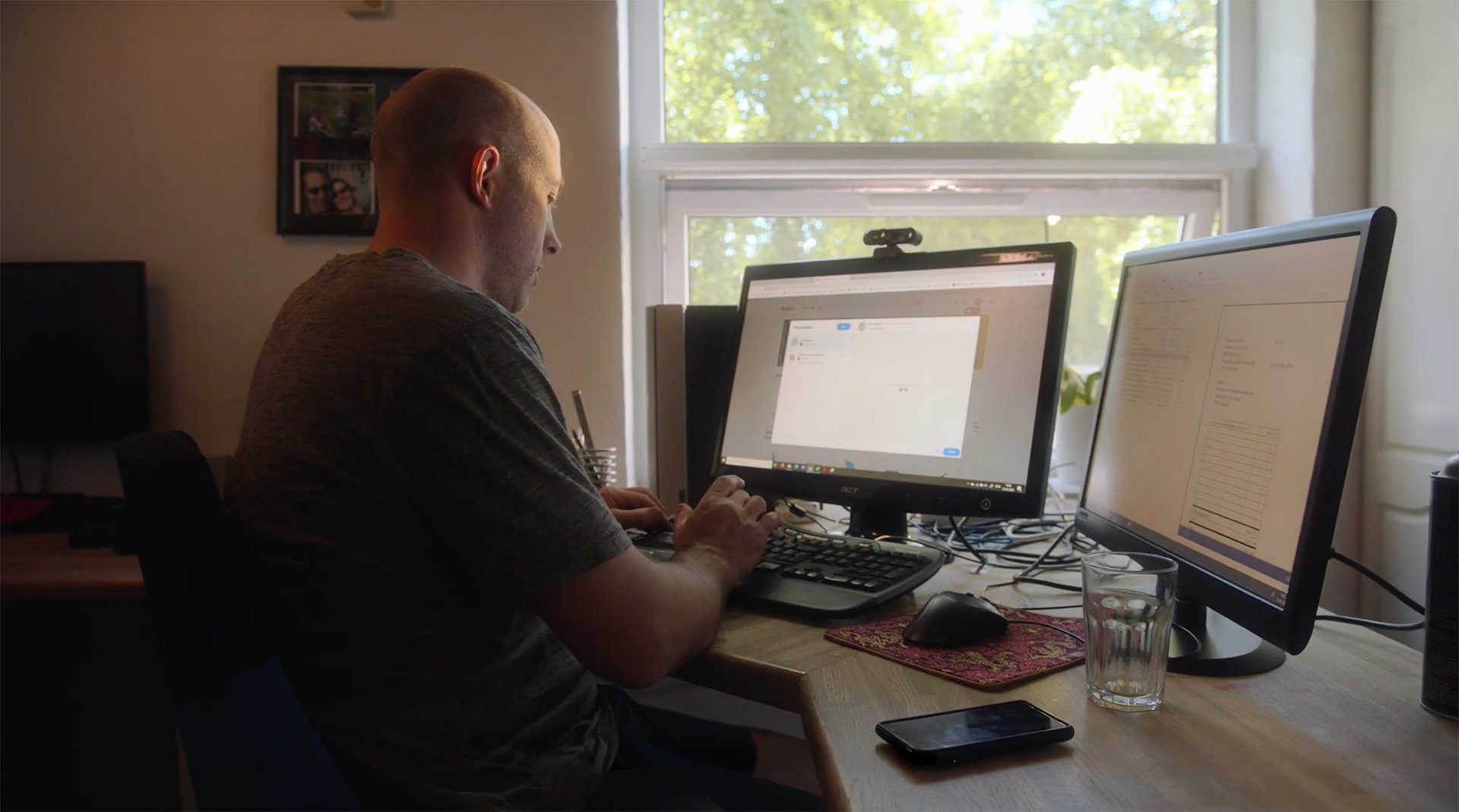
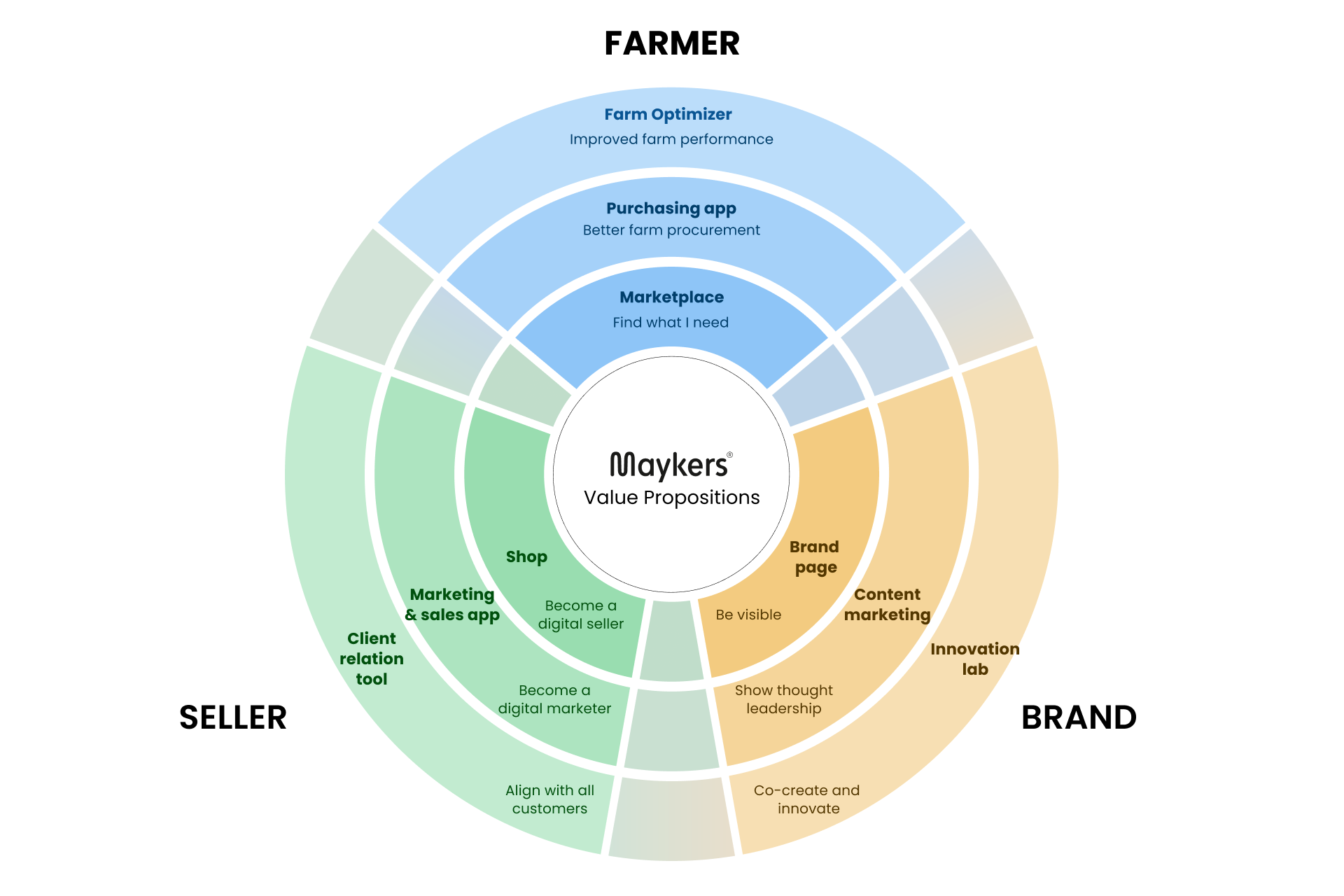
Kramp, one of Europe's largest agricultural parts suppliers, launched Maykers as a corporate startup to organize its own disruption. The ambition was to build a dominant European agriculture marketplace. It would evolve from a transactional webshop into the digital procurement system for farmers. Purchasing was the entry point; services, advice, connections, machine management, and dealer relationships would follow. Maykers was positioned as independent, although Kramp was the largest seller. Competitors hesitated to join a platform backed by a dominant incumbent and farmers remained loyal to long standing local dealer relationships built on trust, credit, and service speed.
2020 - 2022
My roleLead UX Designer
ScopeProduct development, UX design/strategy, Design System
My role was Lead UX Designer, from commercial MVP to functional marketplace. I operated as UX team of one, working directly with Product and leadership to translate business ambition into concepts, flows, and shipped features within technical and organizational constraints.
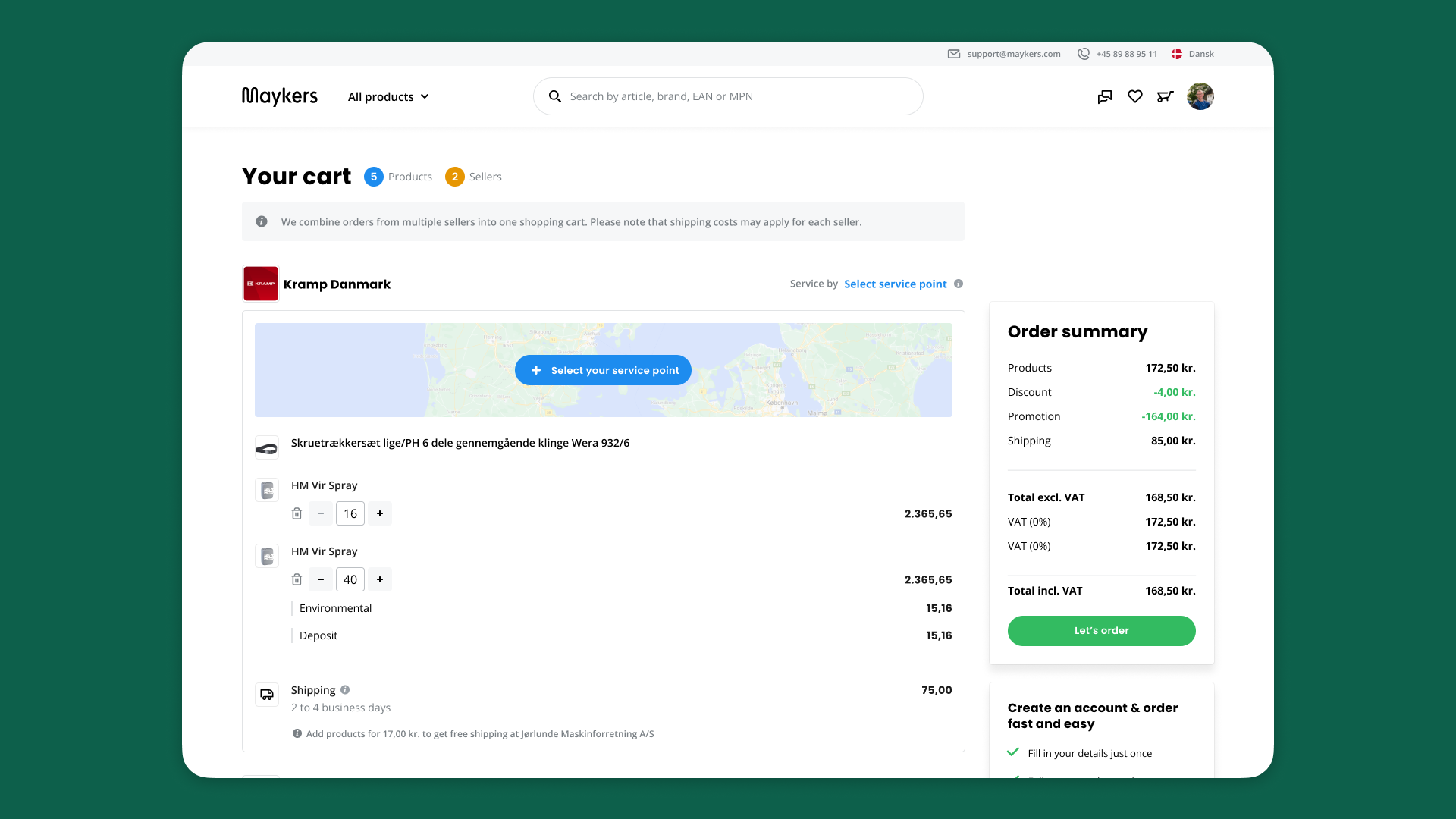
The MVP looked polished but converted poorly: for example, a major drop off occurred between cart and checkout. Account creation was mandatory and limited to VAT registered businesses, which created friction.
More fundamentally, agriculture runs on relational commerce: pricing is negotiated, terms are flexible and service is personal and local. A pure ecommerce model would fail to capture that reality.

Marketplace optimization focused on incremental friction reduction. I clarified add to cart interactions and made the happy path towards checkout more distinctive. Cart states became explicit and persistent. Conversion improved gradually through cumulative adjustments rather than single redesign moments.
Dealer centric mechanics were introduced to preserve existing relationships. Shop in shop concepts gave sellers branded space. Dealer specific pricing logic and quote requests supported negotiated pricing. The virtual seller model allowed online ordering while local dealers handled service and returns. A lot of emphasis was placed on connecting farmers to regional partners.
On the seller side, dashboards enabled suppliers to invite existing customers and bring them along towards the new digital platform.
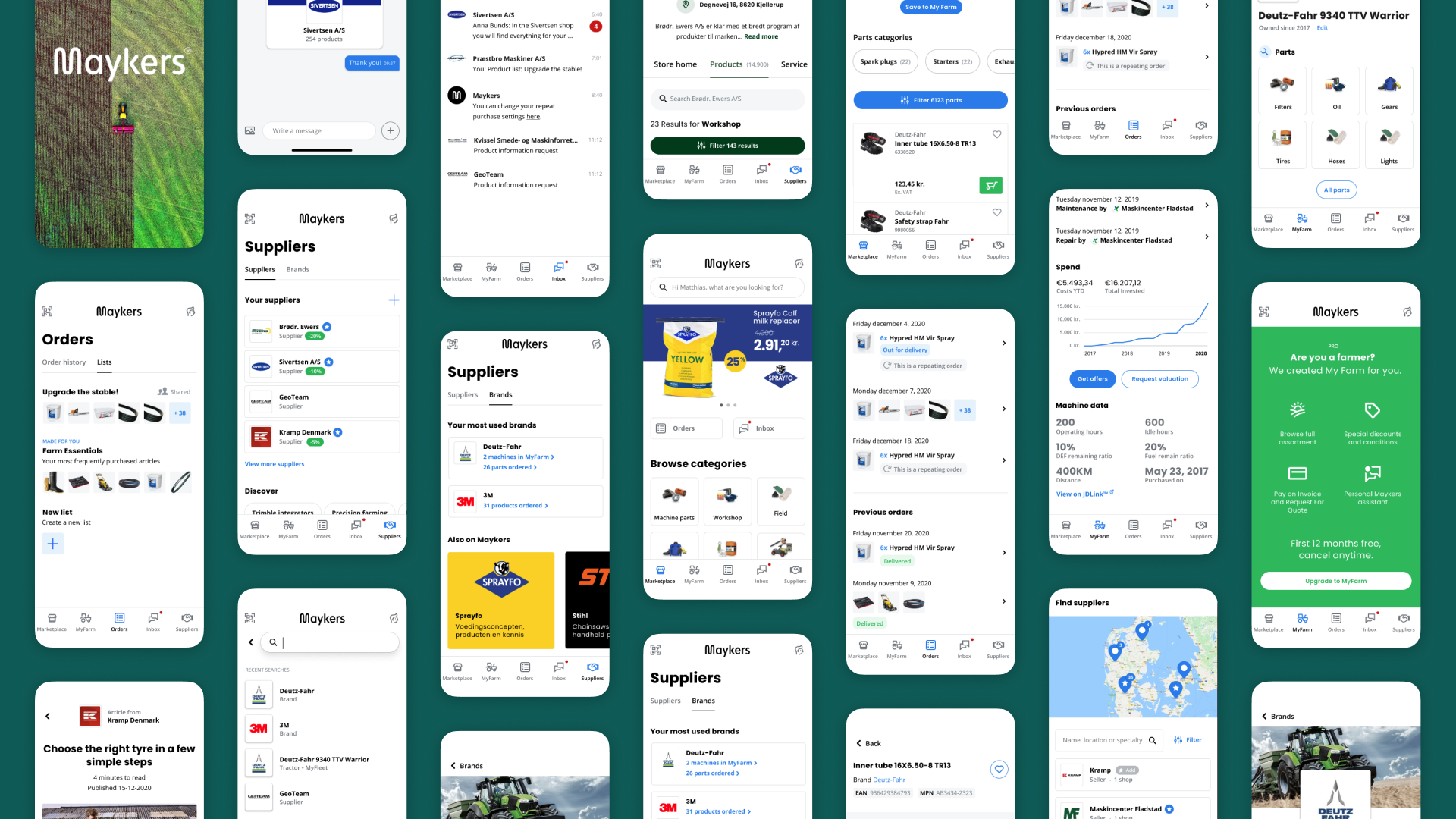
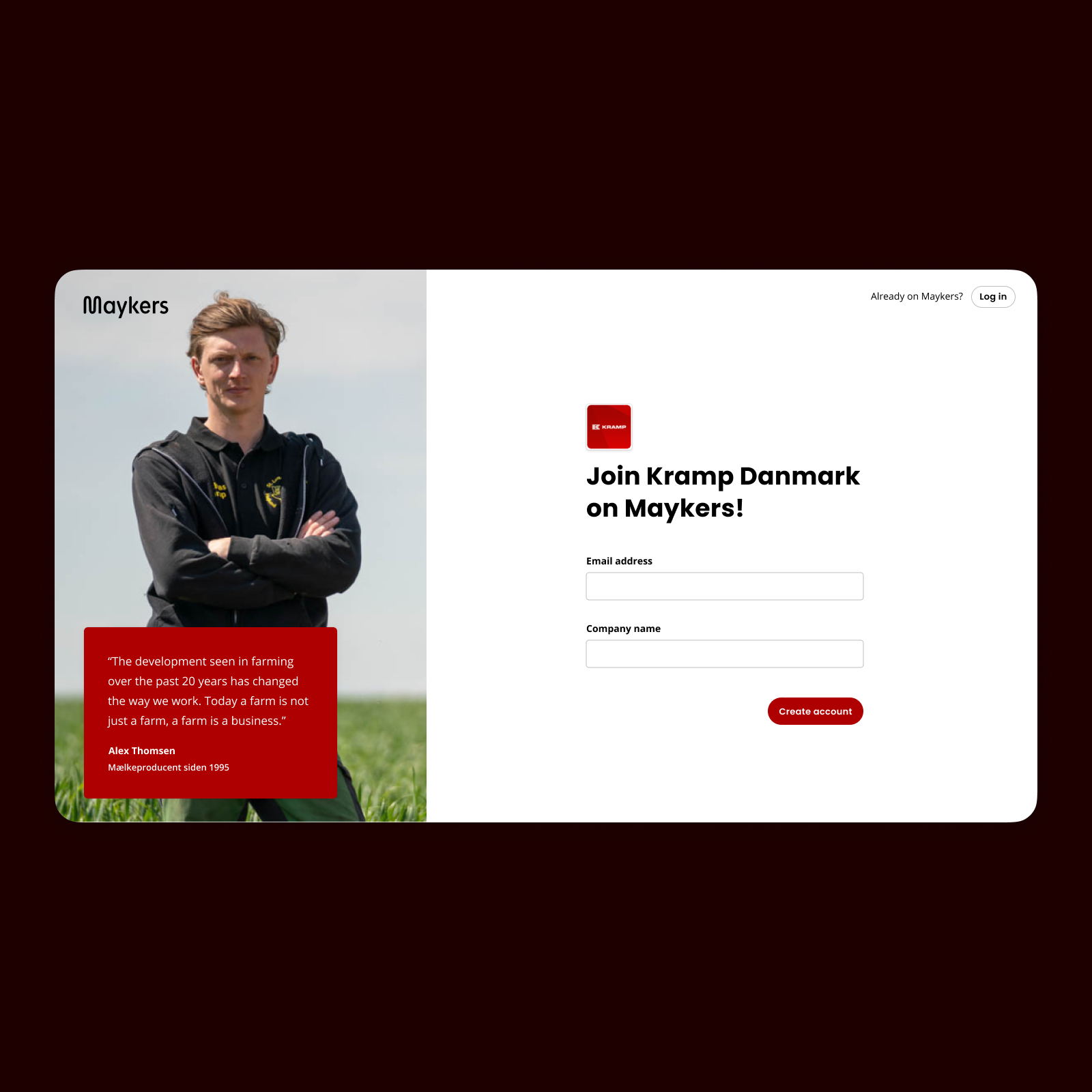
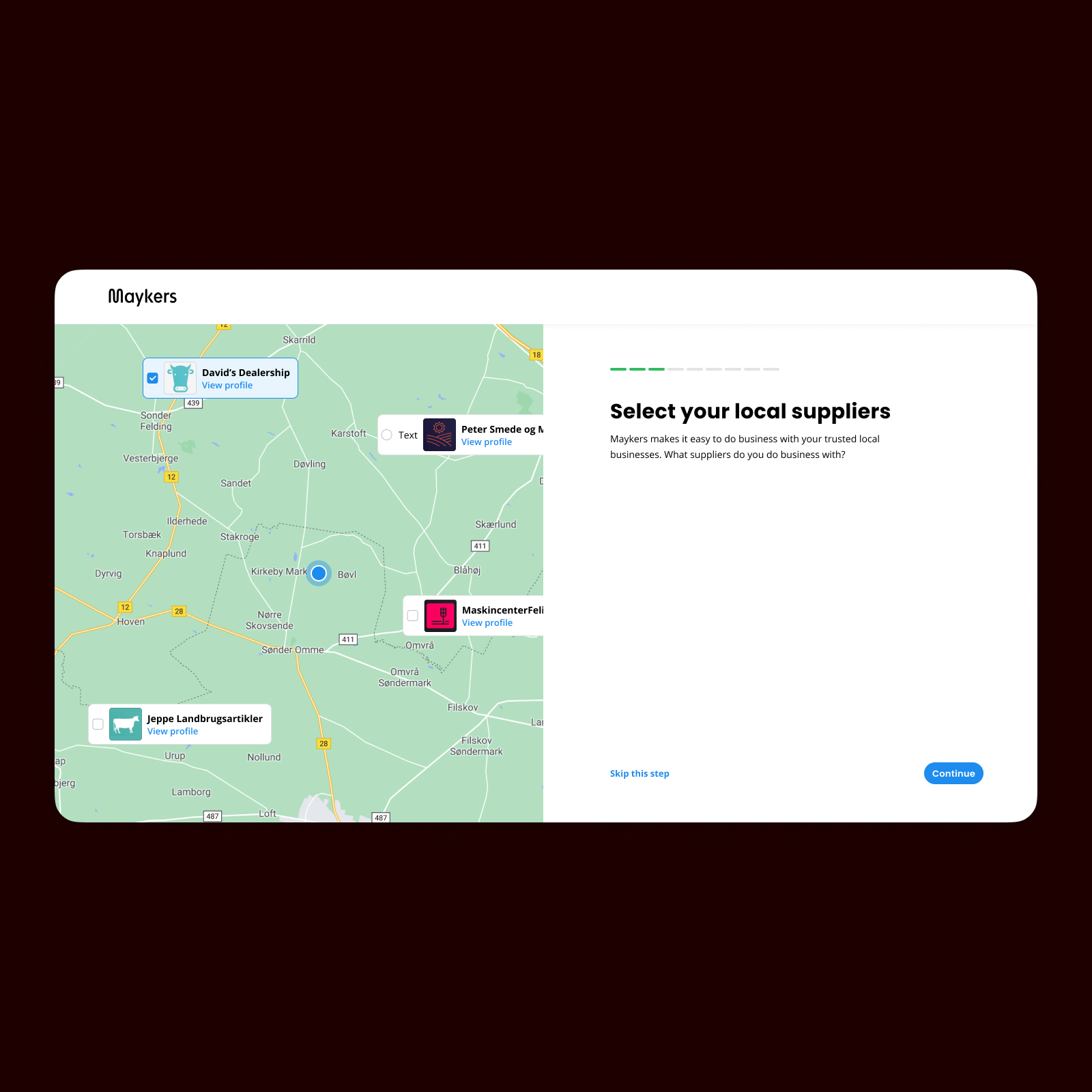
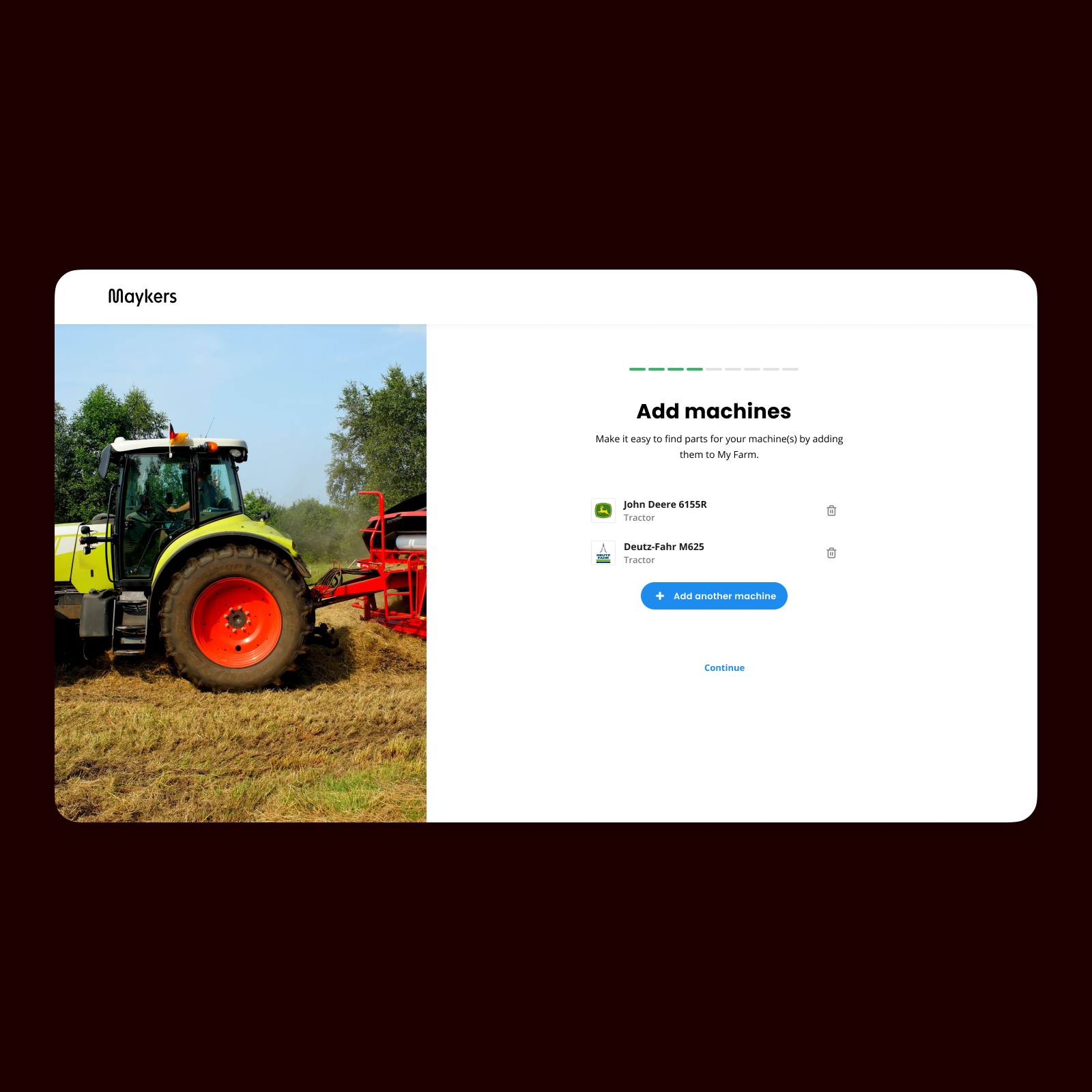
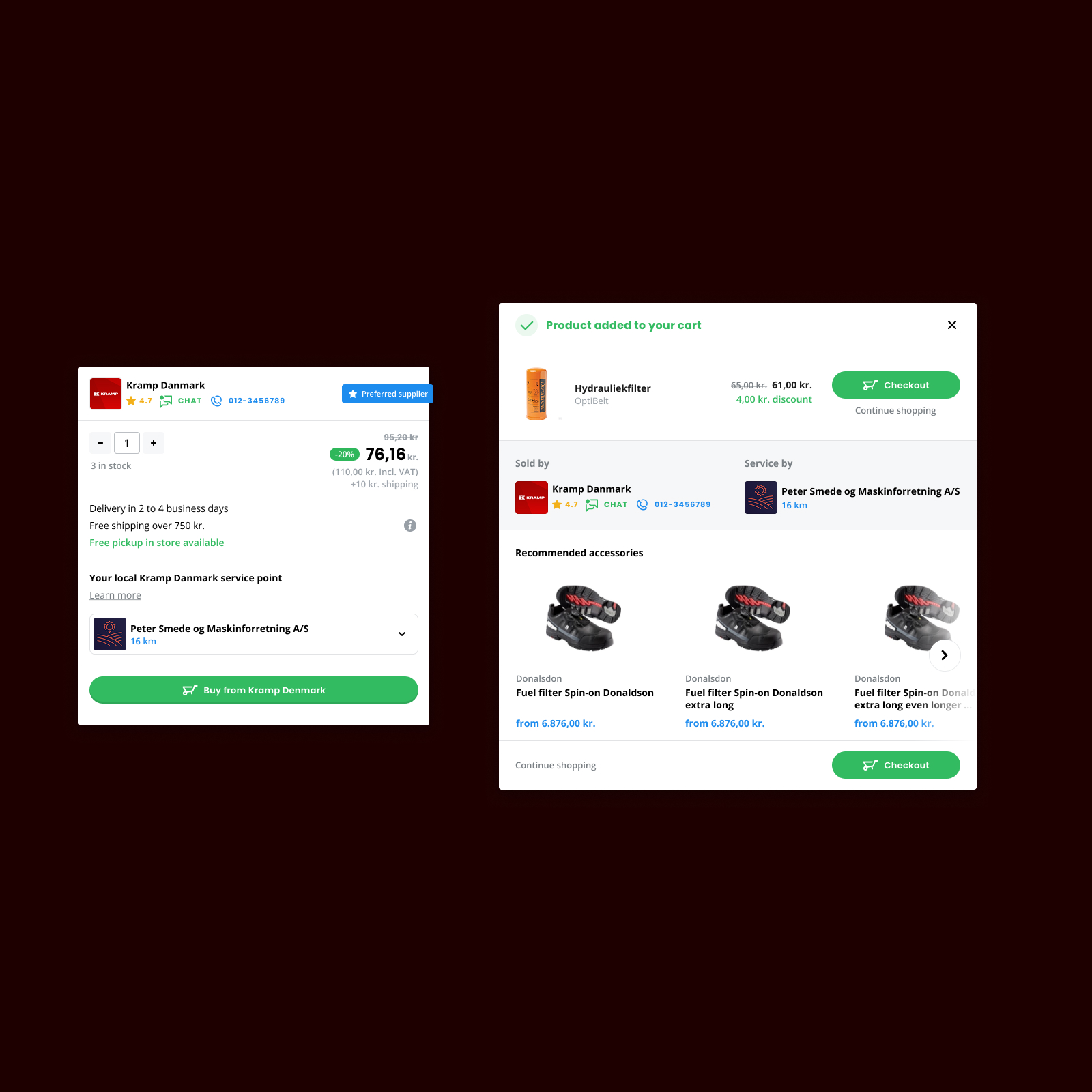
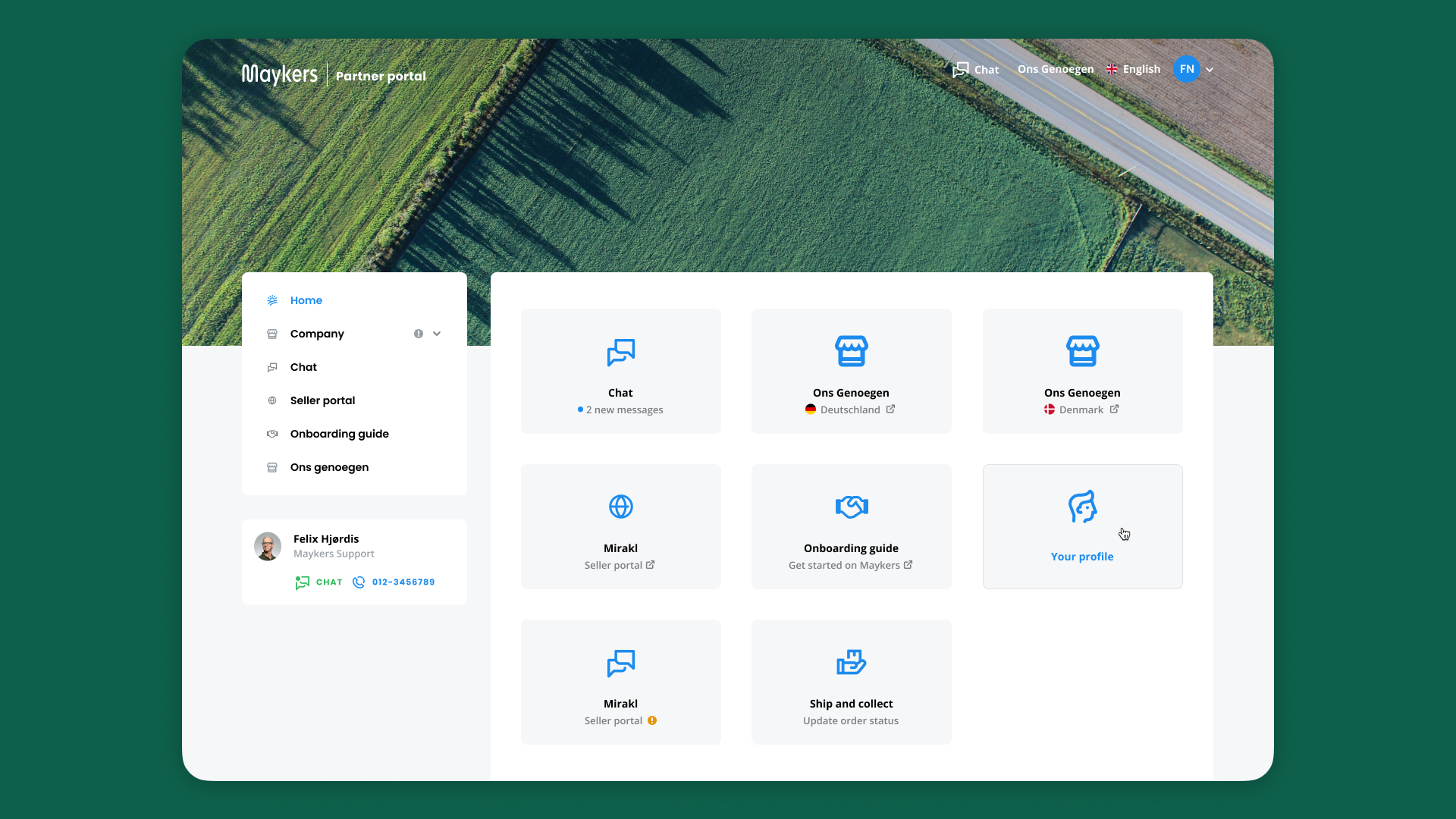
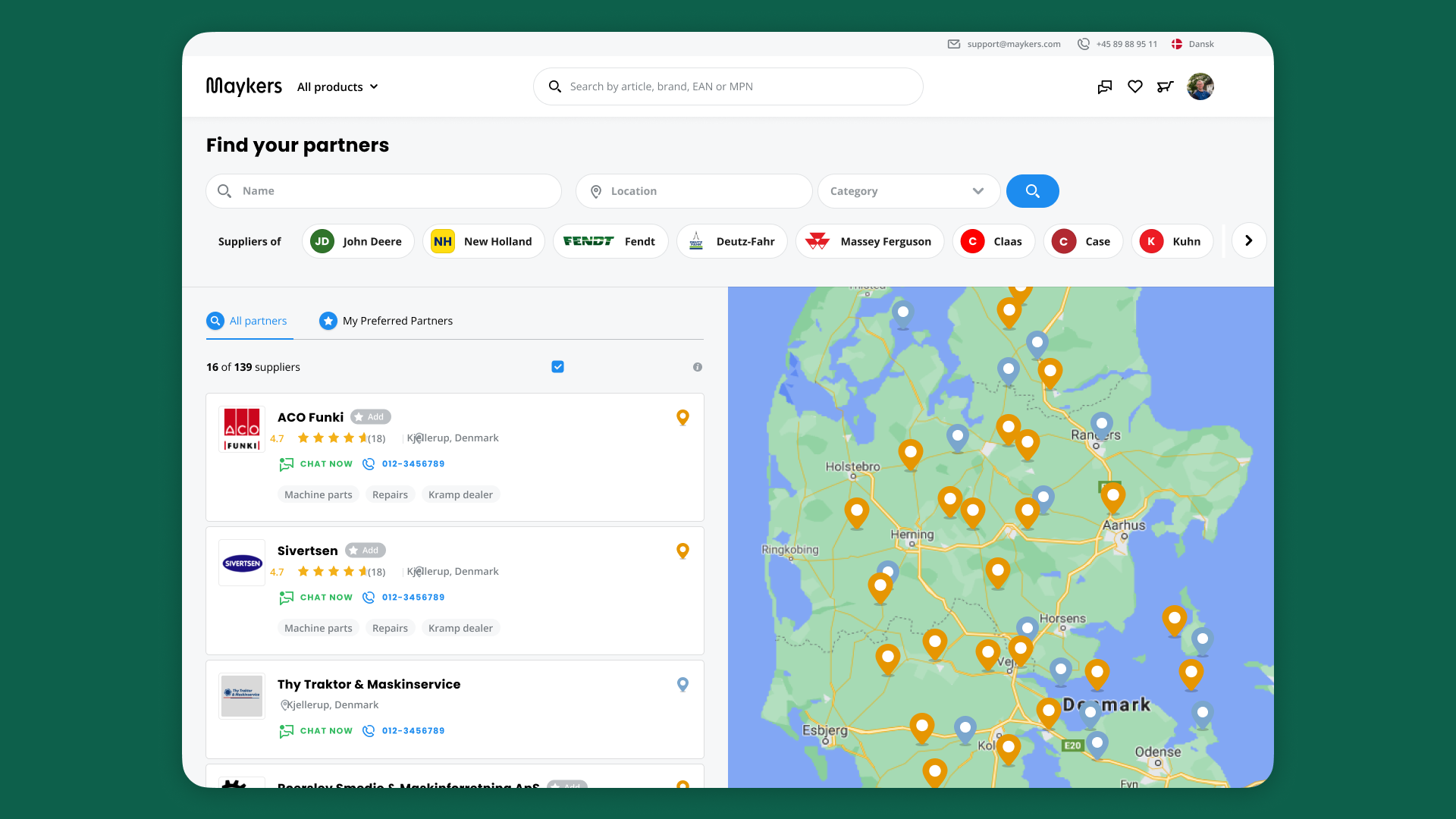
In 2021 the platform reached 1 million euro GMV and continued toward 3 million. The network grew to more than 130 partners. Buyer and seller NPS scores were positive. The MVP evolved into a functioning multi sided marketplace.

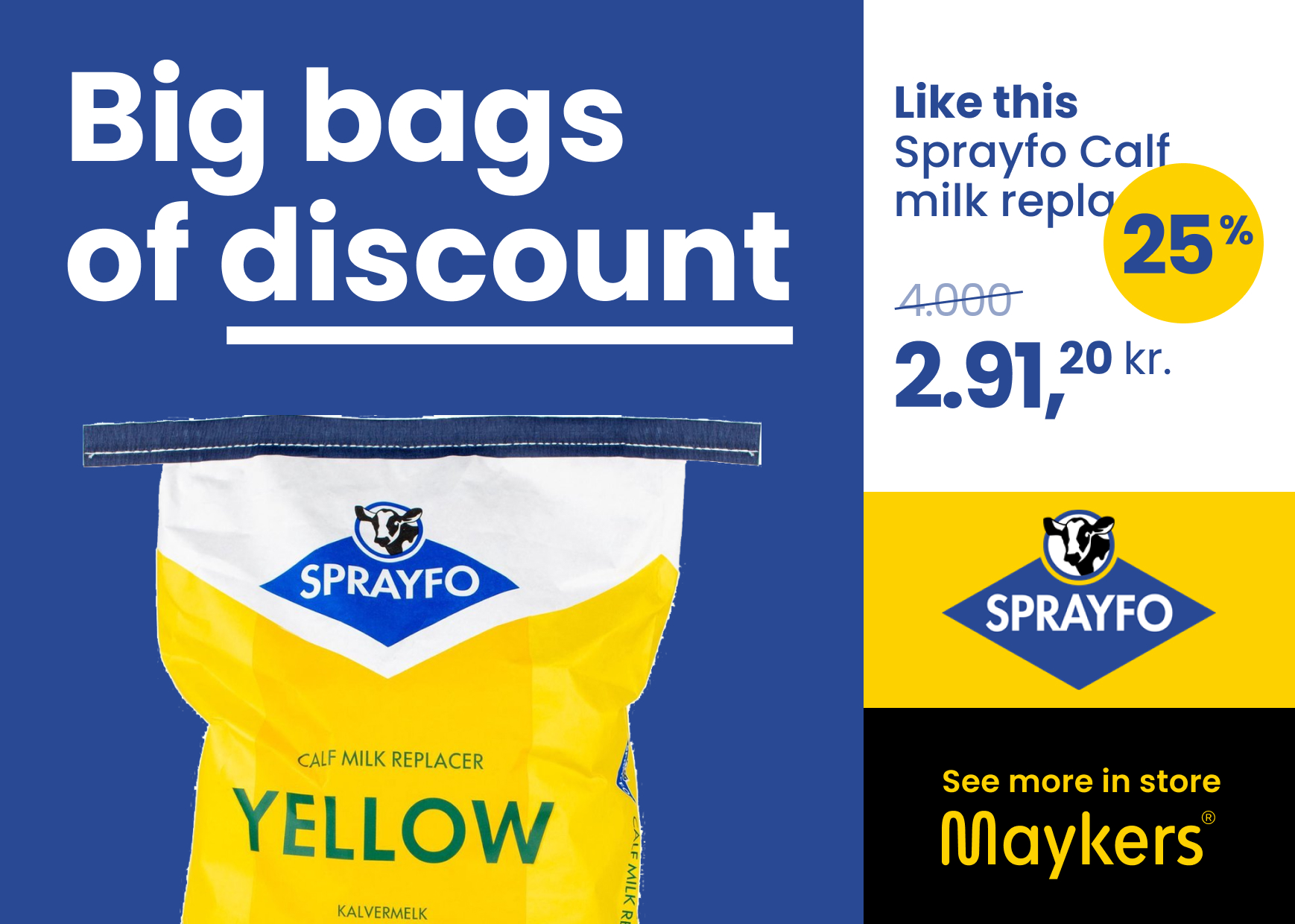
The marketplace never reached critical mass. Assortment remained limited relative to entrenched offline networks. Differentiation for farmers centered on convenience rather than structural advantage. Corporate ownership reduced perceived neutrality and limited competitor participation.
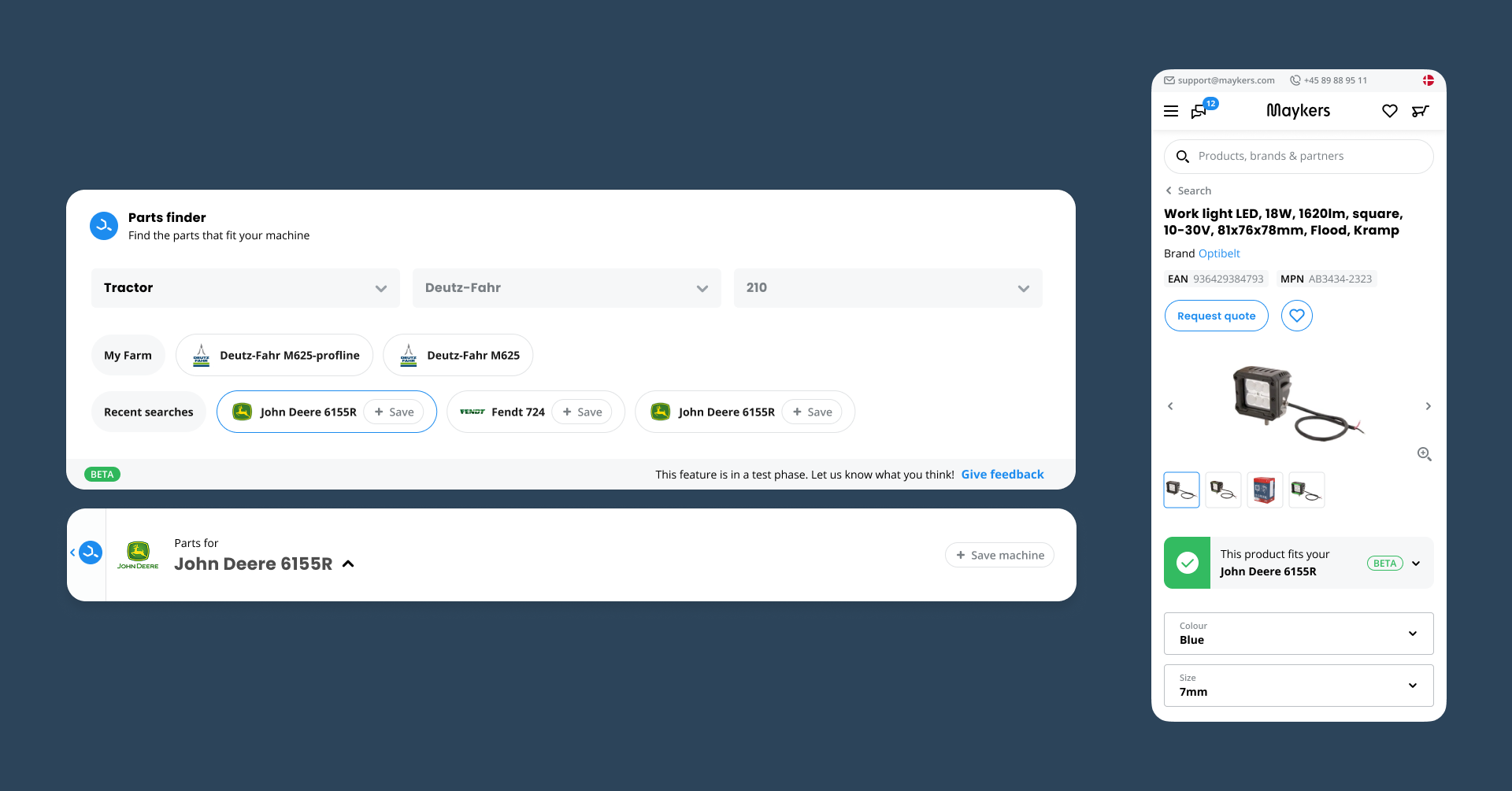
This work reflects experience operating at the intersection of UX, product strategy, and organizational complexity in a traditional B2B industry undergoing digital transition.
Design quality does not guarantee business success. The features worked for users who found them; engagement was strong, conversion improved. The UX performed. The business model did not reach critical mass. Two-sided marketplaces require both sides to show up. The virtual seller concept, leaving the middleman in rather than cutting them out, was a good direction: agriculture runs on relationships. A succesful agri marketplace, would have to empower existing connections. The failure adds context; it does not diminish the design work, it clarifies what design alone can and cannot solve.